
16-Week Group Program
ANXIOUS
TO SECURE
STOP LETTING RELATIONSHIP
ANXIETY CONTROL YOUR LIFE
A structured 16-week program to help you calm the spiral, rebuild self-trust, communicate without losing yourself, and start building more secure patterns in your relationships.
16-Week Group Program
ANXIOUS
TO SECURE
STOP LETTING RELATIONSHIP
ANXIETY CONTROL YOUR LIFE
A structured 16-week program to help you calm the spiral, rebuild self-trust, communicate without losing yourself, and start building more secure patterns in your relationships.
"ANXIOUS ATTACHMENT STEMS FROM A DEEP SENSE OF INSTABILITY WHERE OLD WOUNDS MAKE PEOPLE ANTICIPATE THAT THEY WILL BE ABANDONED AGAIN AND AGAIN."
- JESSICA BAUM
WHY THIS FEELS SO EXHAUSTING
WHEN LOVE FEELS UNCERTAIN, YOUR WHOLE SYSTEM REACTS
You may already know the pattern. You overthink texts, read into their tone, replay conversations in your mind, and feel calm when they're close to you, then activated again the moment it feels uncertain.
The Anxious To Secure Program was built for this. The goal is to help you catch the pattern earlier, calm the activation, rebuild self-trust, and respond from a more secure place.
THE LOOP USUALLY
LOOKS LIKE THIS:
The Trigger/Activation
They take longer to reply, seem distant, need space, or their energy changes.
The Story
Your mind fills in the blank with rejection, abandonment, replacement, or loss.
The Reaction
You check, chase, over-explain, shut down, people-please, or try to get certainty.
Relief That Doesn't Last
You may feel better for a moment, but the fear comes back because the deeper pattern still needs to be worked through.
WHY THIS FEELS SO EXHAUSTING
WHEN LOVE FEELS UNCERTAIN, YOUR WHOLE SYSTEM REACTS
You may already know the pattern. You overthink texts, read into their tone, replay conversations in your mind, and feel calm when they're close to you, then activated again the moment it feels uncertain.
The Anxious To Secure Program was built for this. The goal is to help you catch the pattern earlier, calm the activation, rebuild self-trust, and respond from a more secure place.
THE ANXIOUS ATTACHMENT LOOP:
The Trigger/Activation
They take longer to reply, seem distant, need space, or their energy changes.
The Story
Your mind fills in the blank with rejection, abandonment, replacement, or loss.
The Reaction
You check, chase, over-explain, shut down, people-please, or try to get certainty.
Relief That Doesn't Last
You may feel better for a moment, but the fear comes back because the deeper pattern still needs to be worked through.
WHAT THE LOOP KEEPS TAKING FROM YOU
THE COST OF THIS LOOP

IT COSTS YOUR TIME & PEACE
Anxious attachment can take over your whole day. You replay conversations, check for signs, read into tone and text messages, imagine worst-case scenarios, and try to find certainty where there isn’t any yet.
Even when nothing is happening, your mind keeps scanning, working, and remaining vigilant for threats.

YOUR IDENTITY & SELF-RESPECT
You start needing their mood, their reply, their attention, or their reassurance to tell you whether or not you’re okay.
And the more that happens, the easier it becomes to lose touch with yourself - your standards, your routines, your friendships, your confidence, and the version of you that existed before the anxious attachment took over.

IT COSTS THE RELATIONSHIP
The fear of losing this connection can create the exact environmental pressure that ends up sabotaging the relationship.
Over time, the chasing, over-explaining, protesting, and pushing for safety can create tension, distance, resentment, and/or a dynamic where love starts to feel heavy.
HOW WE DO IT
3 PHASE PROGRAM MAP
On top of the weekly group calls, you'll get more than 7 hours of staggered lessons and exercises covering nervous-system regulation, self-trust, boundaries, communication, avoidant dynamics, conflict, identity, attraction, and the deeper patterns that keep relationship anxiety alive.
And because this round is capped at 25 people, the goal is to keep the group small enough that the calls can stay useful and personal.
Phase 1 - Reset & Regulate
This phase is about clearly uncovering and understanding your patterns, stabilizing your nervous system, and rebuilding self-trust so you stop outsourcing your emotional safety to someone else’s mood, attention, or responsiveness. The goal is to build enough capacity that you can feel activated without immediately checking, chasing, over-explaining, people-pleasing, shutting down, or doing whatever usually gives you relief for the next five minutes.
Ground & Map: We'll map your triggers, your body cues, your meaning-making, and the places you abandon yourself. Clarity lowers fear because your brain stops treating every moment like a mystery.
Stop The Spiral: Anxiety is loud when it believes you’re unsafe. You'll build practical protocols to interrupt escalation early, regulate your state, and stop letting urgency run the show.
Worthiness & Self-Compassion: We’re breaking the “prove to belong” reflex. You’ll learn how to hold your needs without over-apologizing, over-explaining, or collapsing into shame when you don’t get reassurance.
Self-trust: You'll install small, repeatable behaviours that prove reliability to your own body. When self-trust increases, the compulsion to chase decreases.
Values & Standards: This is where you stop bargaining against yourself. You clarify what you actually want, what you’re available for, and what you keep tolerating because you’re afraid to lose the connection.
Internal Boundaries: This is where you stop pausing your life to manage someone else’s uncertainty. Time, energy, and availability boundaries get built here, so your nervous system experiences you keeping your word to yourself.
Phase 2 - Skill Mastery & Relationship Competence
Once you can handle your own activation better, we start working on what you do inside the relationship.
Because being secure doesn't mean becoming detached, pretending you don't care, or learning how to give an avoidant partner unlimited space.
You need to know how to communicate clearly, hold boundaries, handle conflict, repair after things go sideways, and stay connected without making another person's mood responsible for yours.
Secure Speaking & Listening: Learn how to say what you need without turning the conversation into pressure, accusation, begging, or a three-hour explanation. You'll also learn how to listen when you're activated without immediately defending yourself, fixing the problem, or spiralling.
Boundaries That Create Respect: Boundaries that protect your time, energy, and self-respect. You'll learn to hold lines calmly, stop over-giving, and stop pausing your life to manage someone else's mood.
Integrity and self-leadership: Security is a daily practice. You install systems for decisions, routines, and standards so you lead your own life instead of reacting to emotional weather. This is where you become hard to shake.
Repair Protocols: Conflict is normal. The difference between stable couples and unstable couples is not “do they fight,” it’s whether repair happens quickly, specifically, and consistently. You learn what repair actually is, how to pause without punishing, and how to return without re-opening the wound.
Constructive Conflict & Negotiation: How to fight and solve problems without spiraling. We map the anxious and avoidant escalation sequences, separate content from process, repair quickly, and negotiate real-life agreements (routines, plans, intimacy, expectations) without pressure, power struggles, or silent resentment.
Avoidant Attachment Dynamics & Skills: What avoidant deactivation actually is, what makes chasing backfire, what "space" means in nervous system terms, and how to protect your self-respect while giving the connection the best chance. Practical pacing, re-entry, and the beginning of protocols for distance cycles.
Phase 3 - Identity & Expansion
This phase is about turning the work into who you are. You stop treating security like something you do when things are calm, and start living it as a baseline. This is where you anchor your standards, your routines, your decision-making, and your relationship choices from identity instead of anxiety.
Identity: Identity drives behaviour. You build a daily calibration that sets your state before you set your schedule. The goal here is consistency so that your nervous system learns what “anchored” actually feels like.
Polarity & Attraction: Anxious attachment can make you manage, chase, over-give, over-function, and slowly build your life around keeping the relationship okay. We'll look at what that does to attraction and polarity, how to stay warm and connected without becoming dependent, and how to rebuild a life you genuinely enjoy living whether your partner is beside you that day or not.
Integration & Beyond: The goal is to leave the 16 weeks knowing how to recognize the old pattern when it returns, what to do when you're activated, and how to keep practicing more secure behaviour instead of expecting yourself to never struggle again.
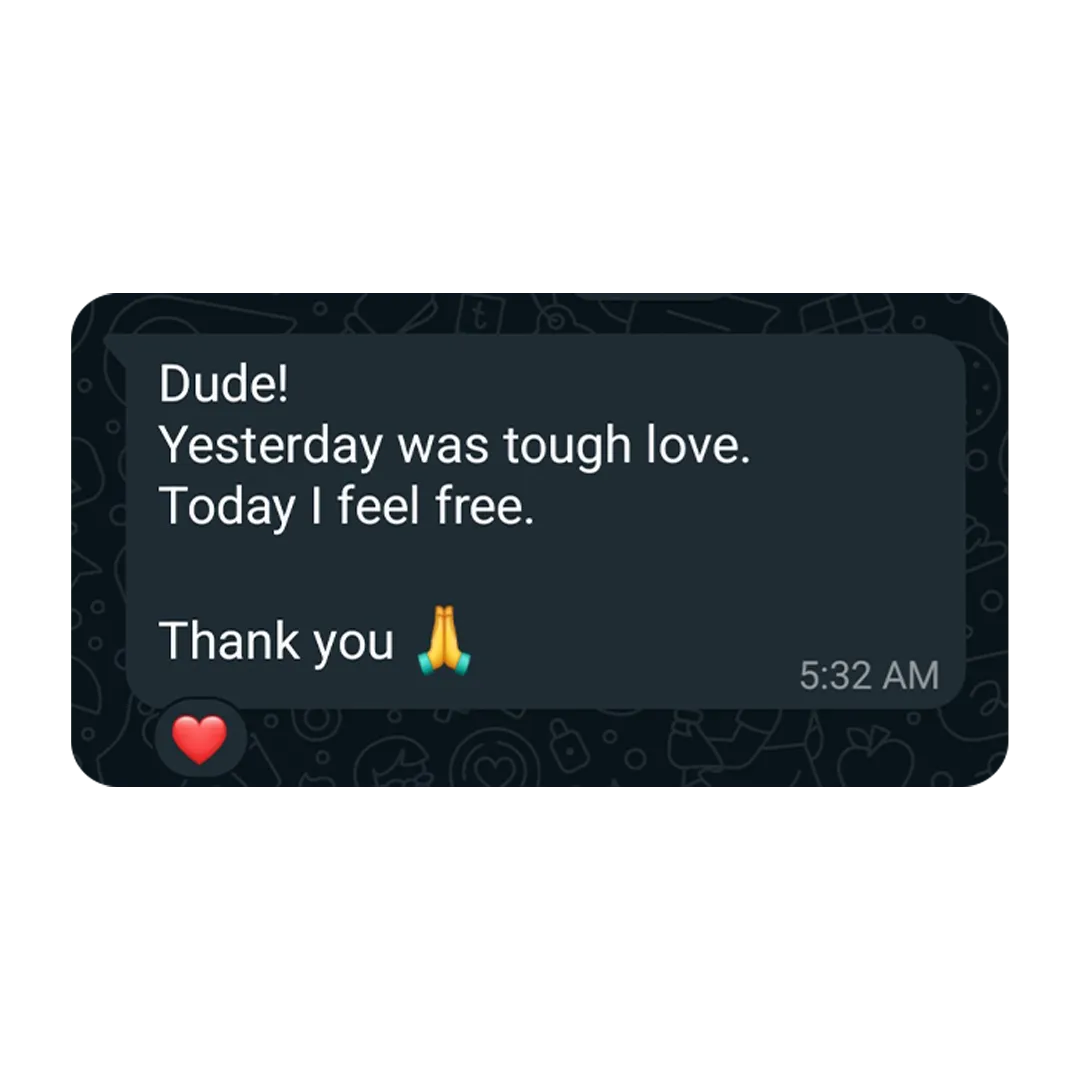
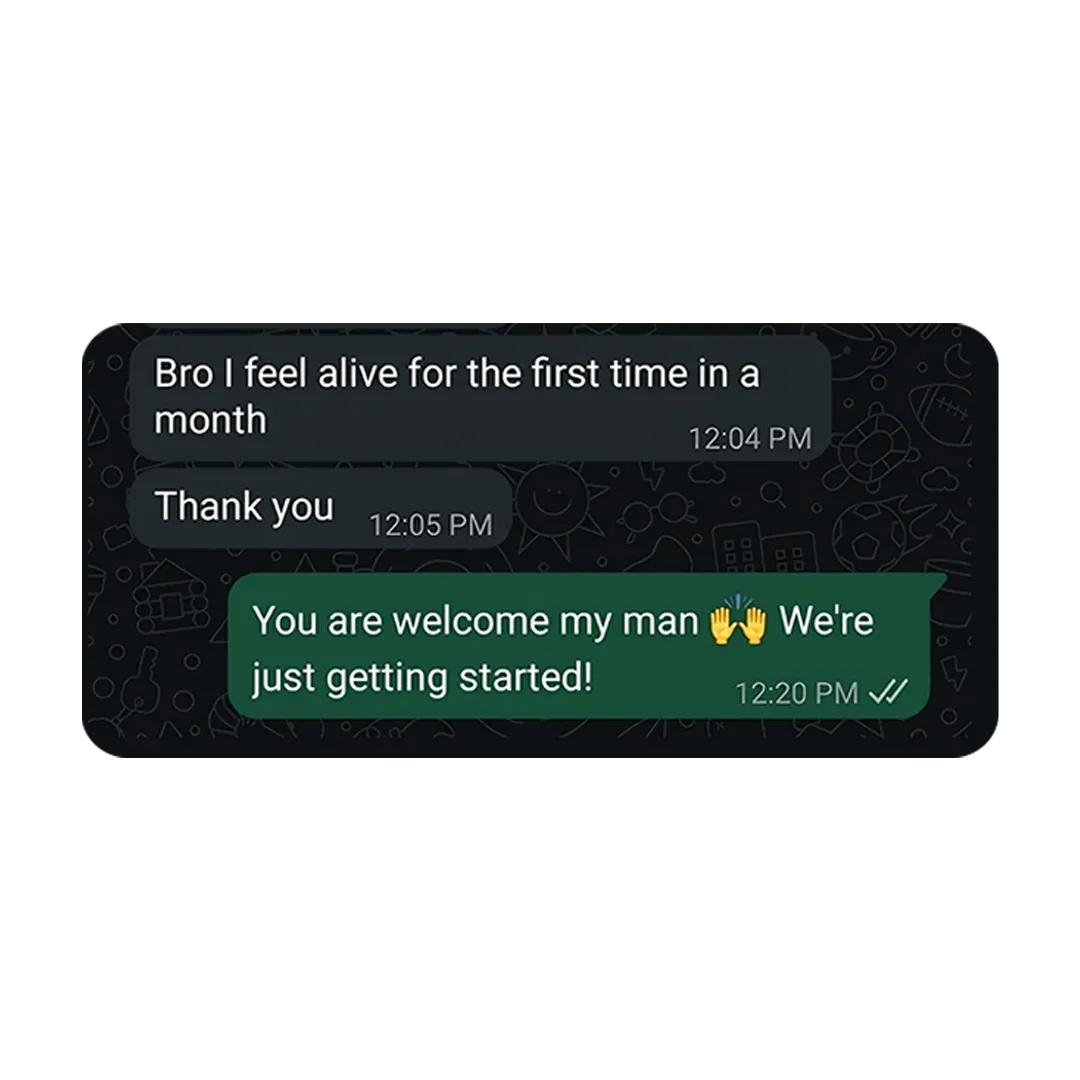
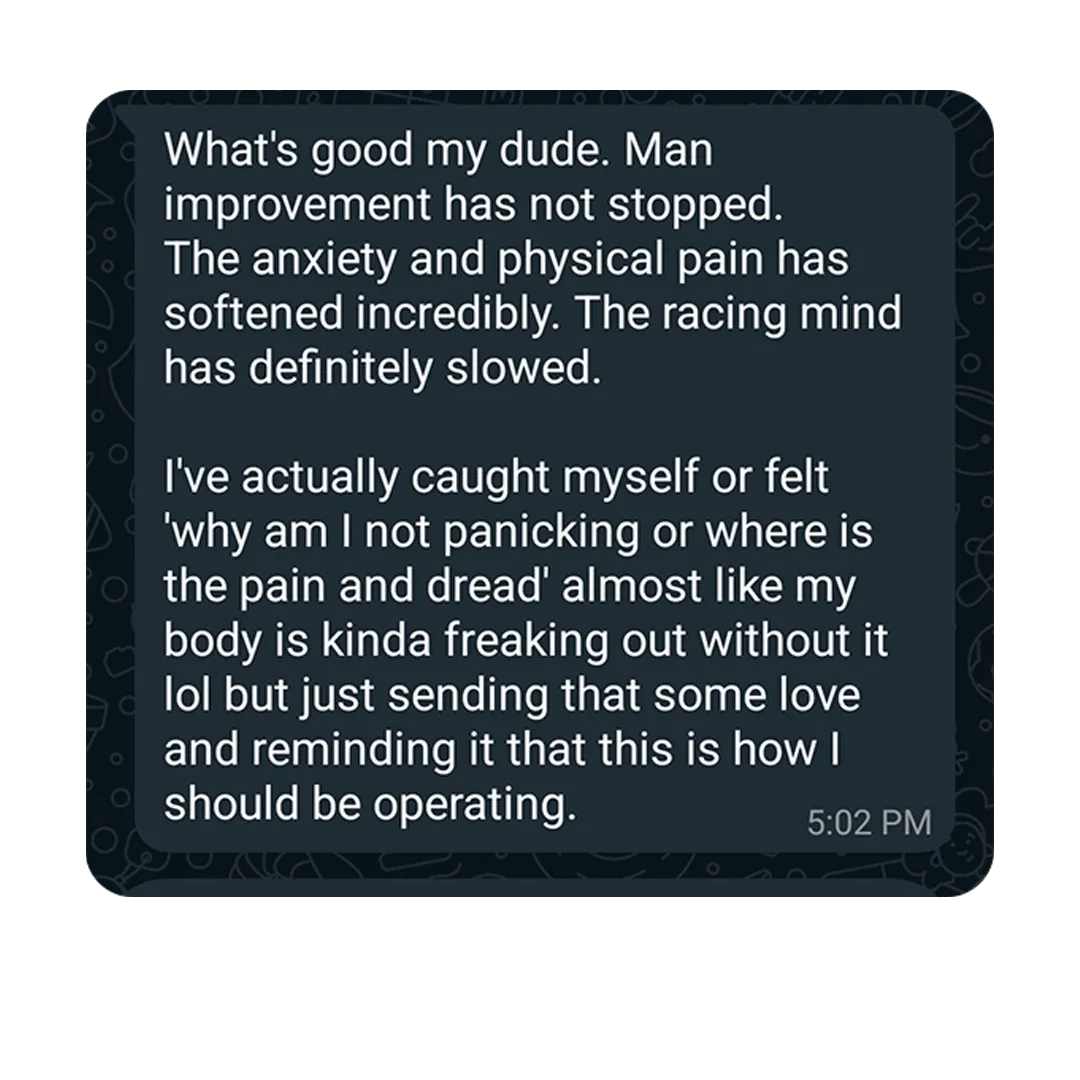
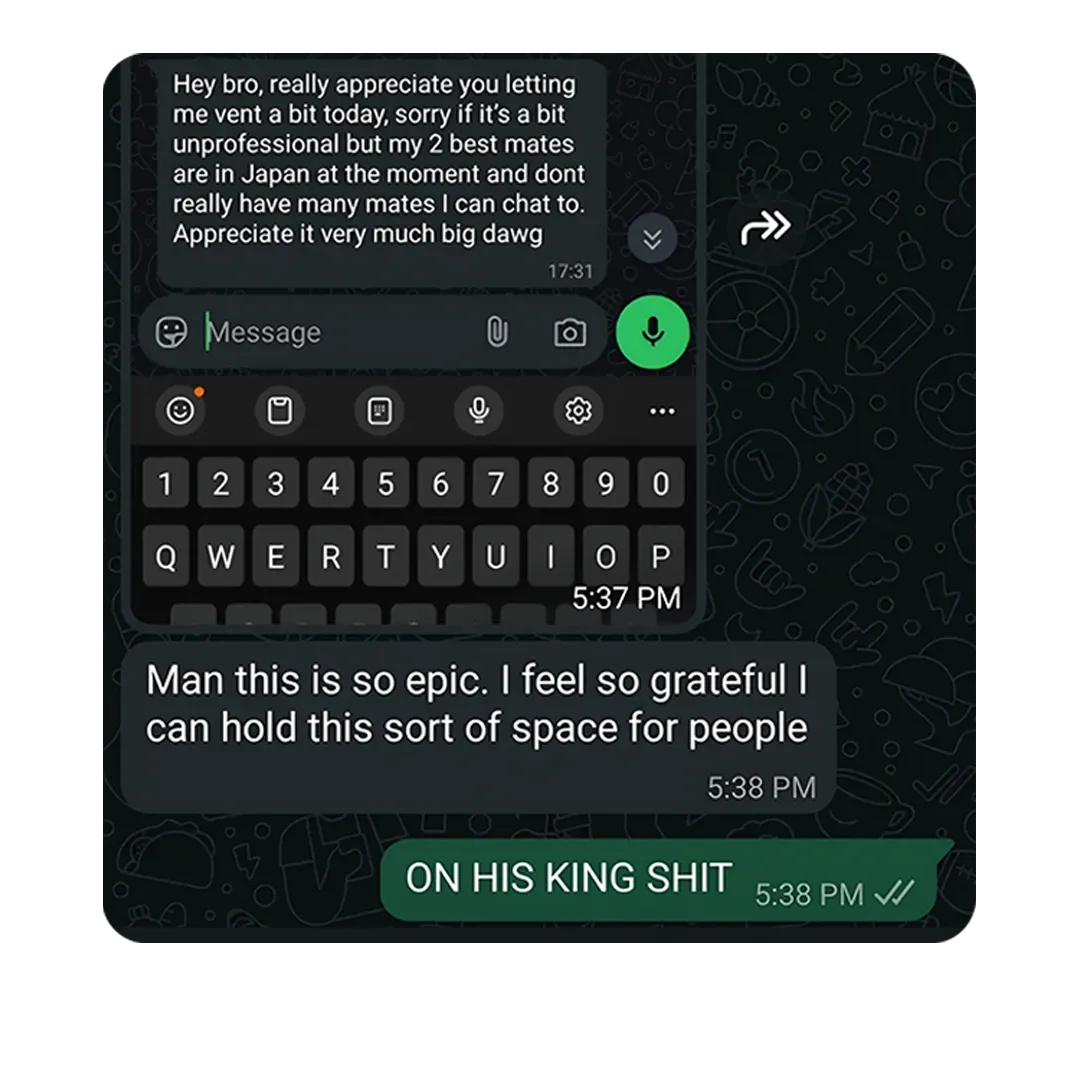
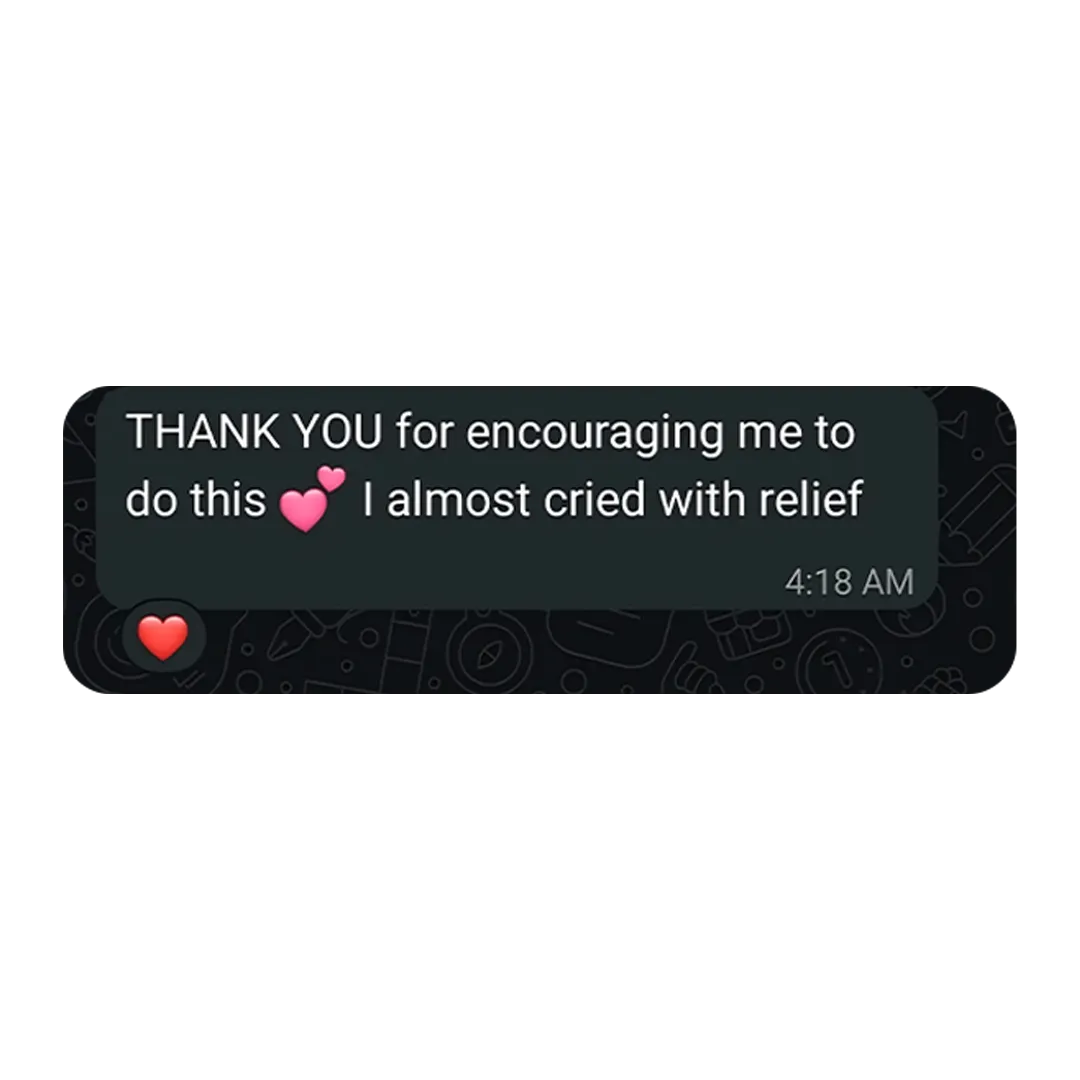
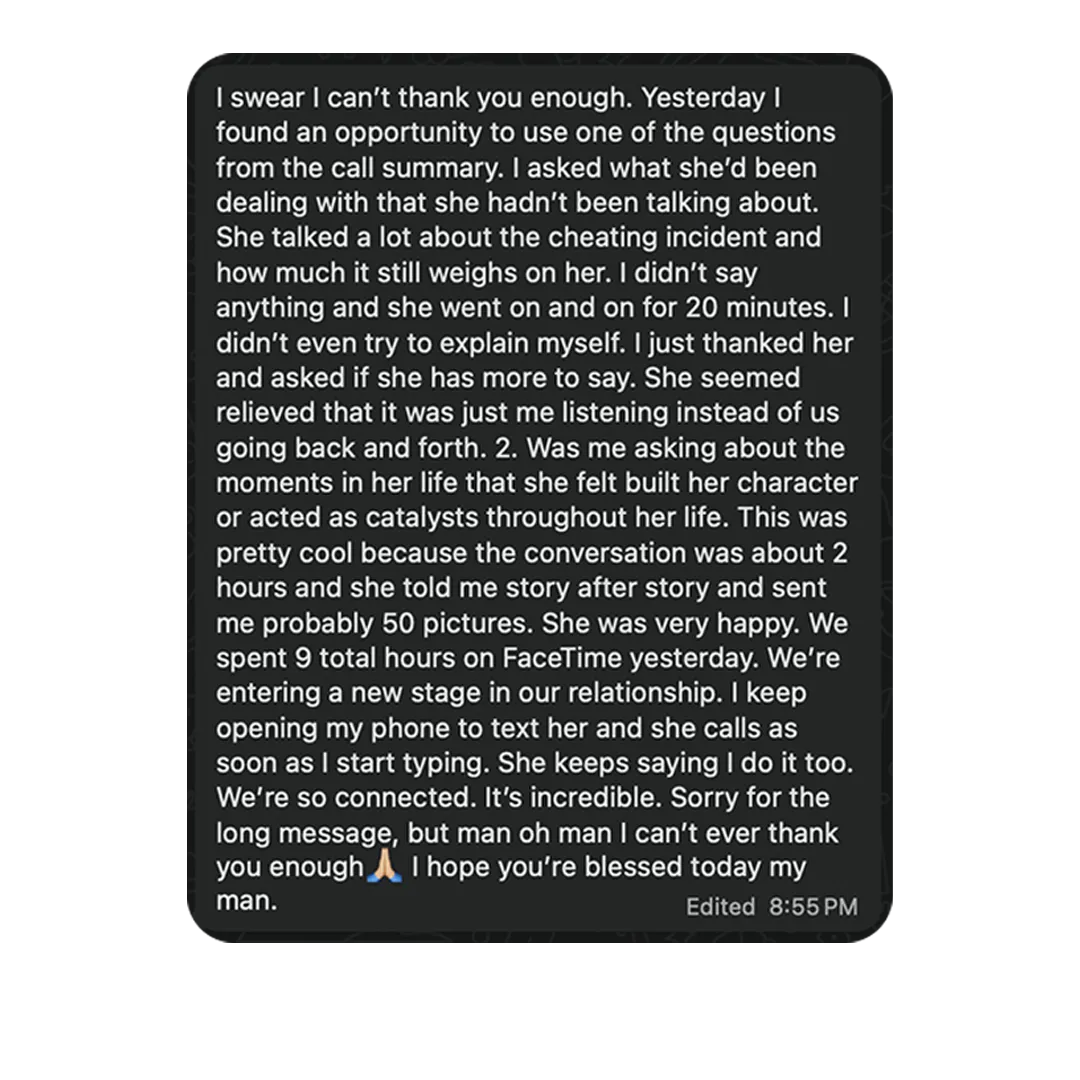
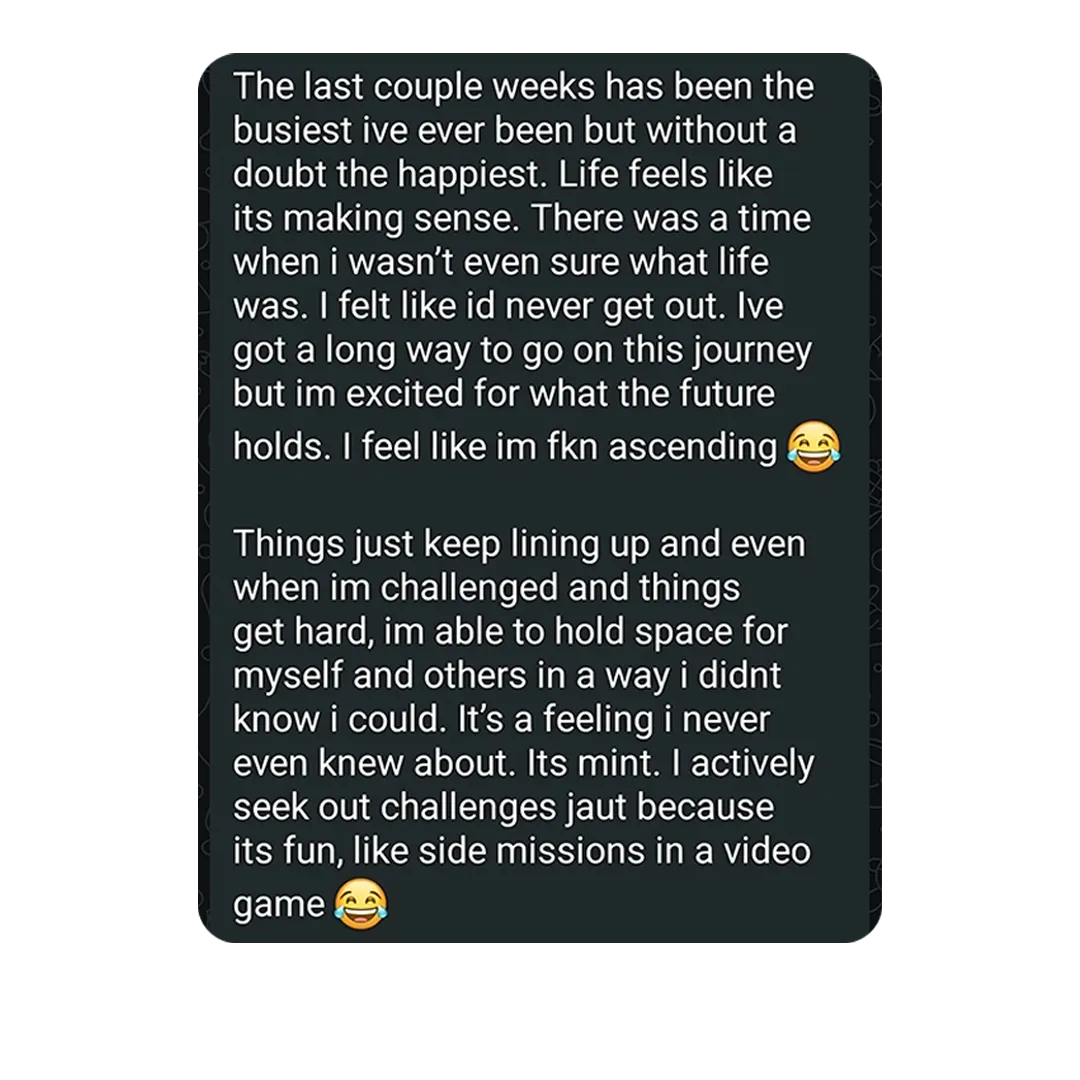
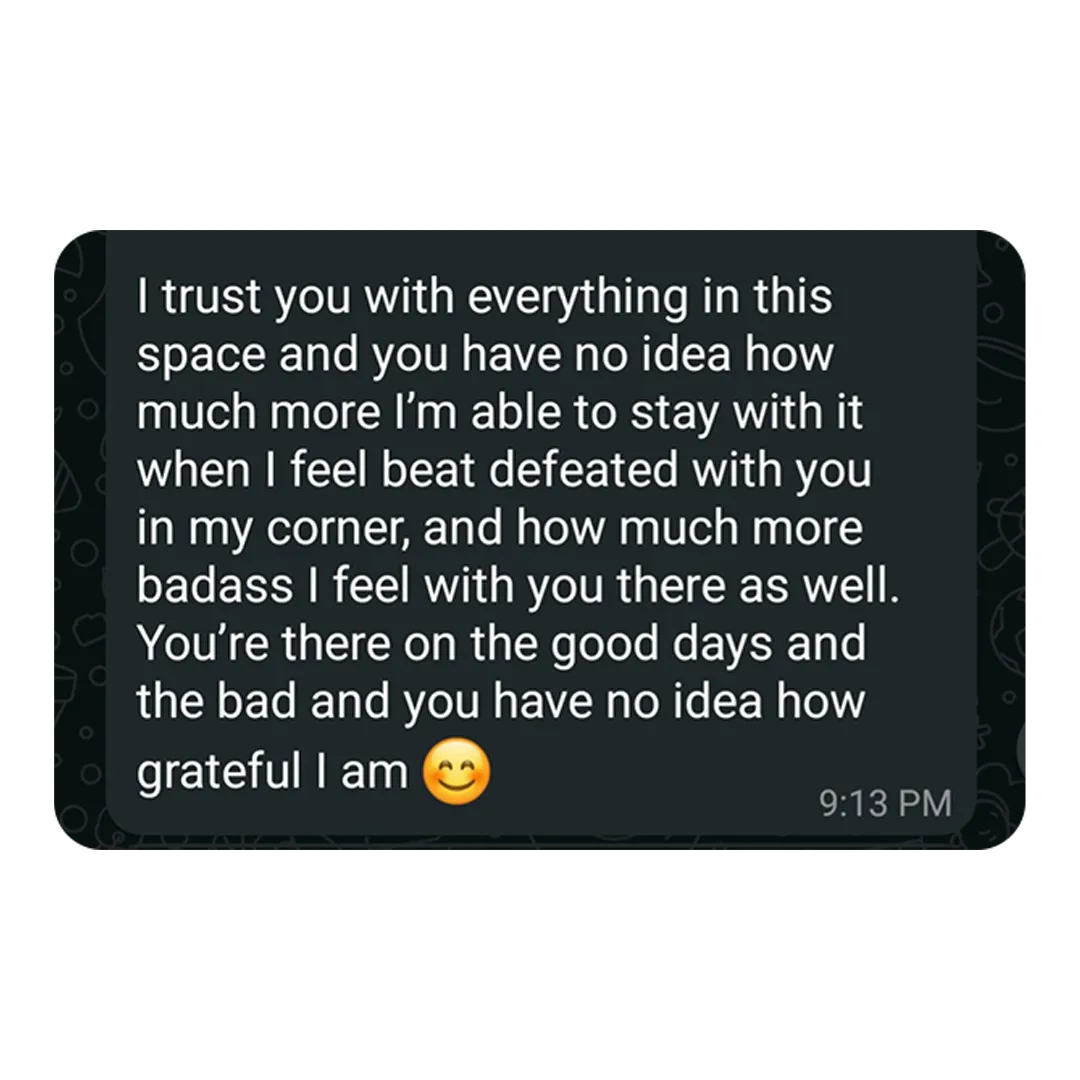
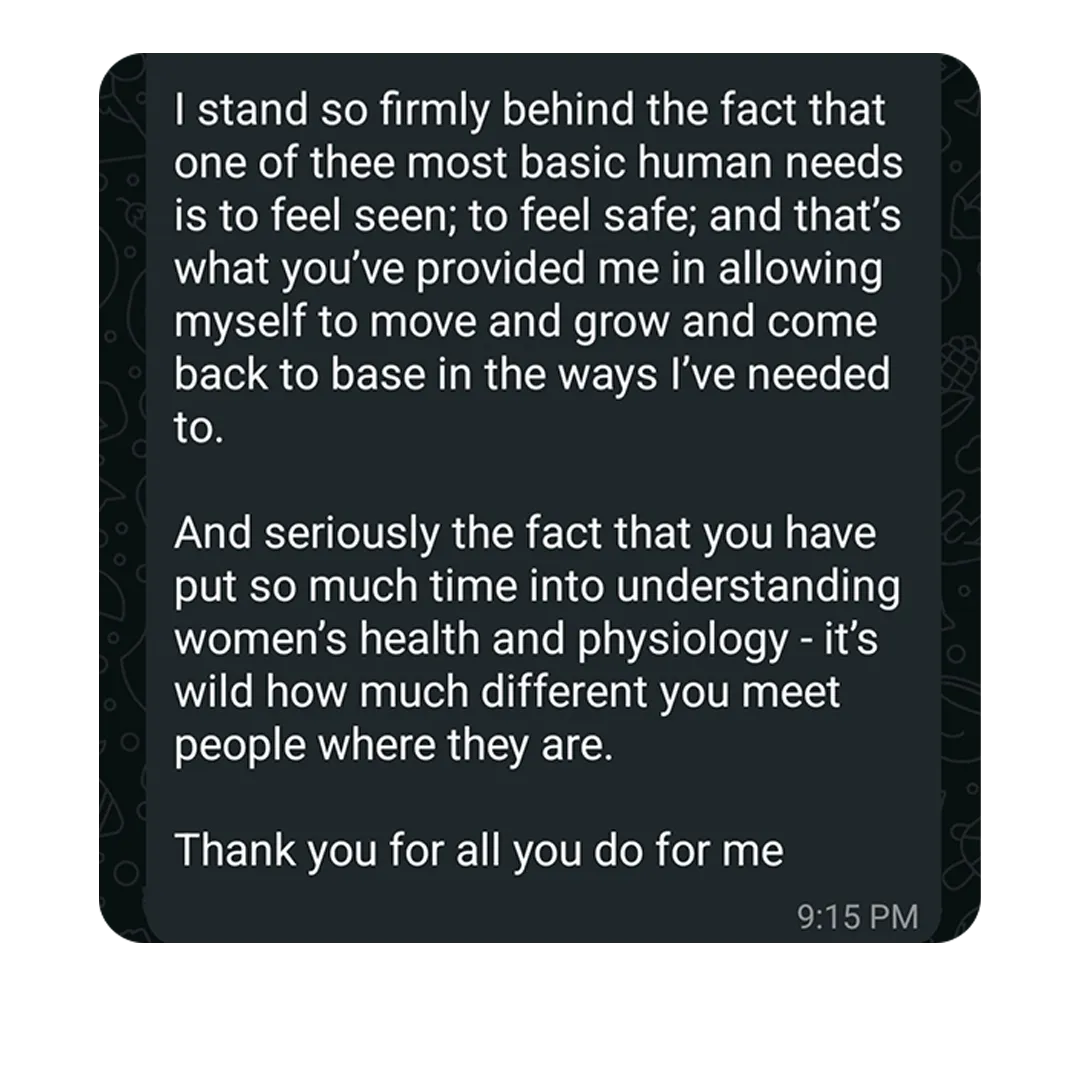
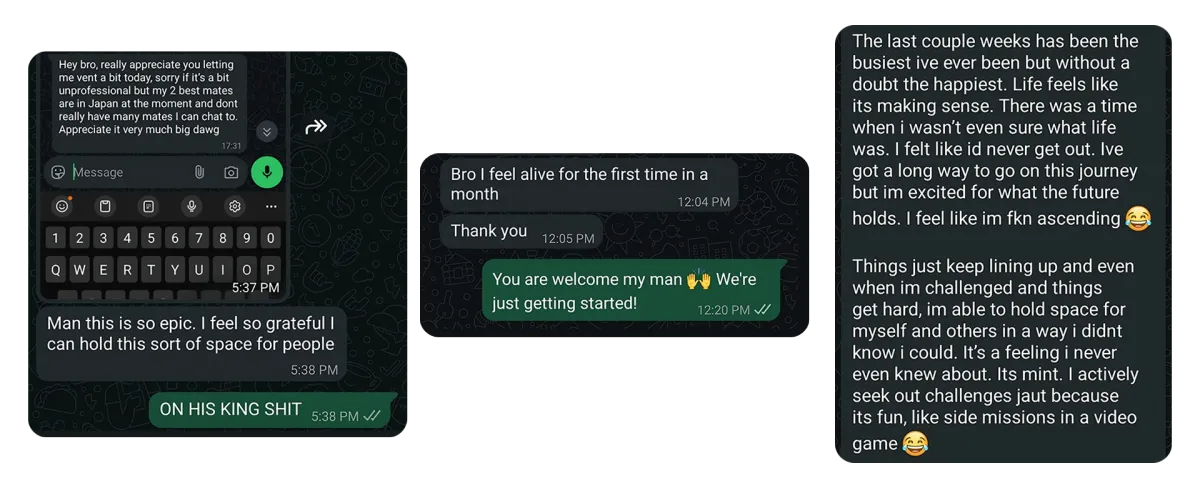
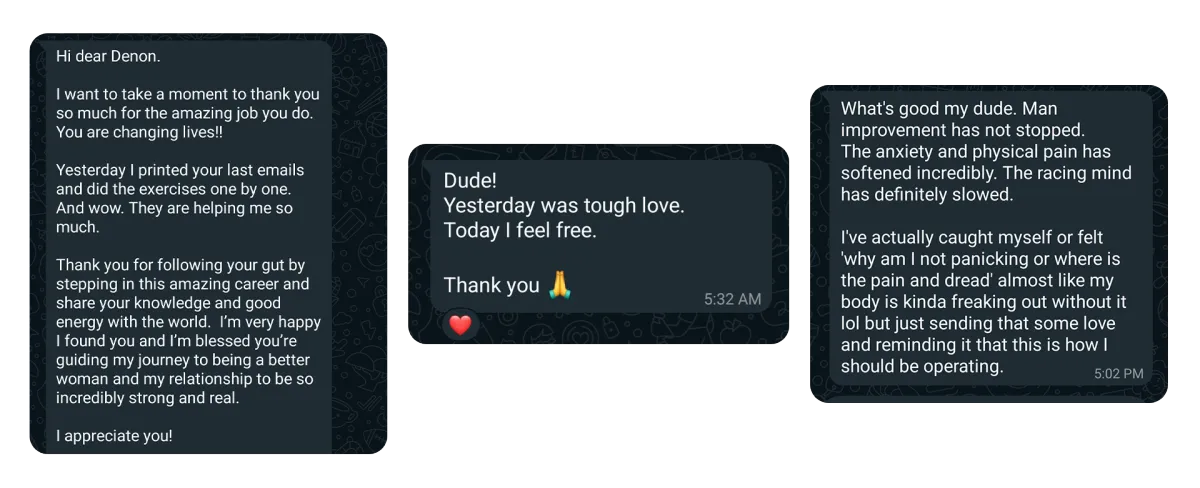
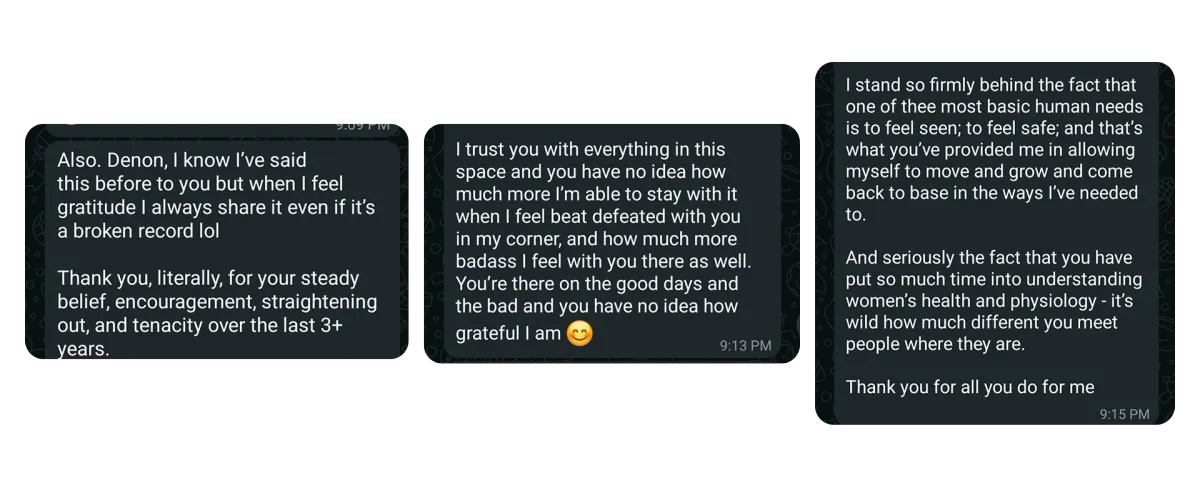
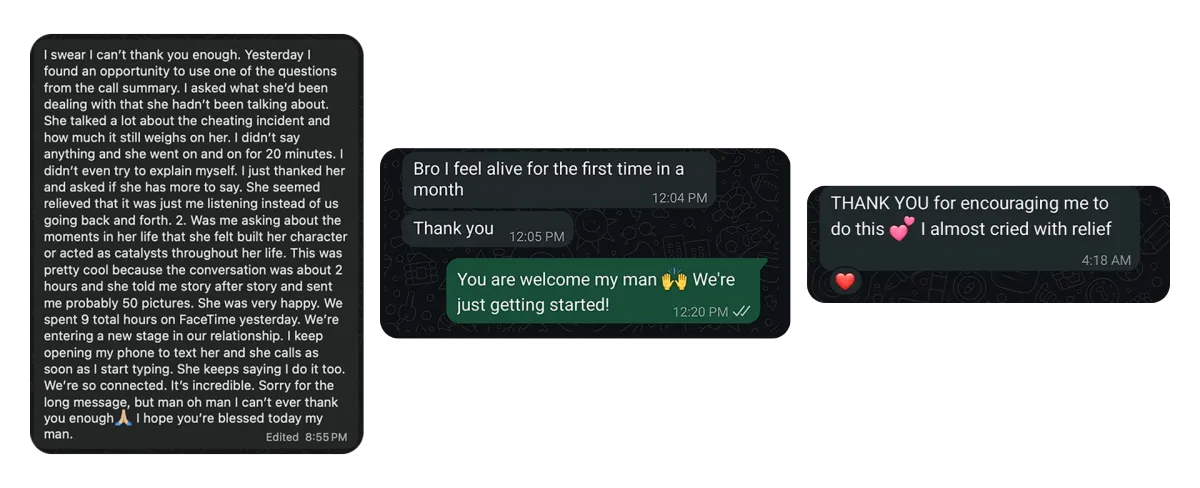
TESTIMONIALS
PEOPLE WHO HAVE DONE THE WORK


SUPPORT
The modules gives you the framework, but the weekly calls are where we work through what’s happening in your life while you’re trying to apply it. Knowledge requires embodiment.
Every Sunday, we’ll meet live as a group so you can ask questions, get coached, work through setbacks, and get help with the situations bringing your anxious patterns to the surface.
Call times per time zone:
9:00 AM Pacific
11:00 AM Central
12:00 PM Eastern
5:00 PM UK
6:00 PM Central Europe
WHO YOU COULD BECOME
THE RESULTS
CONFIDENCE & SELF TRUST
You build the ability to handle uncertainty without needing another person's reply, mood, or reassurance to immediately make you okay. You get clearer about what you want, what your boundaries are, and how to stop bargaining against yourself because you're afraid of losing the relationship.
EMOTIONAL & SELF MASTERY
You learn what to do with the anxiety before it turns into checking, chasing, over-explaining, shutting down, or pushing for immediate resolution. You practice having harder conversations, handling conflict, repairing after mistakes, and staying connected without letting urgency take over.
SECURE DATING & RELATIONSHIP
Relationship anxiety has a nasty habit of making everything else second fiddle. Your work. Sleep. Training. Friends. Goals. Sometimes even your entire personality.
Part of becoming more secure is rebuilding a life that still belongs to you while you love someone deeply.
ENROLMENT IS OPEN
ONLY 25 SPACES AVAILABLE
ENROLMENT IS OPEN
ONLY 25 SPACES AVAILABLE
16 Week Program
4 Payments of $80 USD
Full Anxious to Secure 16-week curriculum
Weekly Live Coaching Support Calls
All calls recorded
7+ hours of lessons, exercises, and practical tools
Regulation, self-trust, boundaries, communication, conflict, attachment patterns, and relationship skills
Limited to 25 people

4 monthly payments of $80 that start from the date of reserving your spot.
Questions?
FAQ
Can you guarantee results?
Human change isn't linear and nobody can ethically guarantee a specific emotional outcome. What we do guarantee is the structure. The 1-on-1 calls (if your tier includes them), the curriculum, the integration practices, and the direct feedback. If you do the work, you'll have the best possible conditions for long-term progress.
Are you a therapist or claiming to replace therapy?
No and no. We don't diagnose conditions. This is coaching and mentorship, which means we help you identify challenges and then give you action-focused and skill-focused tools to work the problems you're experiencing. In our experience, many people report that this work feels highly therapeutic, even though it isn't therapy.
This isn't for anyone looking to be diagnosed or prescribed. Diagnoses should come from licensed professionals. If therapy is needed, we may collaborate or refer out. This also isn't for anyone currently in crisis care, active addiction, or ongoing domestic violence.
Denon Maximchuk Coaching provides coaching, mentorship, and education. We do not diagnose or treat mental health conditions. If you are in crisis, contact local emergency services.
Is this right if I'm single?
Yes. The tools we build here install secure patterns now, so you walk into your next relationship with a different nervous system than the one that shaped the last one.
Is this right if I'm in a relationship?
Yes. Doing this work inside a relationship can be uncomfortable, especially in the early phases when your partner is feeling the shift in you before you can fully name it. That discomfort is usually a sign the work is doing what it's supposed to.
Will this save my relationship or get my ex back?
I can’t promise what another person will choose to do.
What we can work on is how you handle anxiety, uncertainty, boundaries, communication, conflict, self-trust, and the behaviours that keep reinforcing the pattern.
For some people that improves how they show up in an existing relationship. For others, the bigger result is realizing what they need to stop tolerating or repeating.
What if I need to cancel?
Because this is a 16-week program with only 25 spaces, your enrollment reserves one of those spaces for the full program. When you join, you’re committing to all four monthly payments of $80.
CUSTOMER CARE
LEGAL

Maximchuk Consulting. All Rights Reserved.